Showing posts with label smart materials. Show all posts

Thursday, August 1, 2019

Innovation R&D | Robotic Drilling System | oil and gas industry

If you are interested in presenting a talk at the conference ( World Congress on Petrochemistry and Chemical Engineering ), please submit a copy of your abstract here Abstract Submission


Robotic Drilling Systems AS (RDS) develops a game-changing drill-floor solution consisting of robotic technology for fully unmanned drill floor operations. The system handles pipe and tools and the technology can be applied both on pipe-deck and drill-floor on all drilling structures (new builds and retrofit) for both land and offshore installations.

The robotic control system ensures seamless, fast and precise work operations between the electric drill floor machines. The benefits are faster drilling operations, high safety level due to unmanned operations, and lower installation, maintenance, and operations costs.

The technology development is supported by the Research Council of Norway, Statoil, Shell, ConocoPhillips, Total, ENI, and Innovasjon Norge.


RDS-Description


RDS is developing a fully electric and robotic drill floor for the fast, seamless and human-free operation of pipe and tools on the drill floor. In order to achieve this, three major innovations had to be brought forward:


  • Electric drill floor machines, such as electric roughneck and electric pipe handler, to allow for precise operation
  • A dynamic robot control system to allow for flexible operations
  • A drill floor robot to replace manual operation

Fig.1-The Robotic System

The system can be used on new-builds or retro-fitted to existing rigs. In order to achieve a seamless system with good motion control, RDS has replaced the conventional hydraulic drill floor machines with a new generation of electrical machines or robots. In addition to avoiding an HPU, the electric system is easier to install and integrate on the rig. As standard electric motors and gear are used, potentially the reliability will be higher and the energy consumption will be significantly lower for electric robots.

Early studies indicate a potential saving of up to 40 rig days per year for a rig (depending on how much of operation time is considered critical), including non-productive time. Several thousands of manual operations will be avoided.

In addition to saved rig time, improved HSE and reduced OPEX, a full robotic system will give other benefits, such as less downtime, faster installation, lower noise, less energy consumption, and less CO2 emission.

RDS is in the process of workshop testing the robotic drill floor system including the seamless co-operation between the machines/robots.

In general industry, robots have been used for decades in the manufacturing process. The oil and gas industry has so far been very conservative.


Related image

Robot-based drilling operations will generate a wealth of process data that can be used to better understand and optimize the drilling process.

The technology not only reduces the personnel costs associated with the rig, but it also redefines the role of the drilling crew. The focus will change from drill floor tasks to the well construction process.

Tuesday, July 30, 2019

Petroleum Exploration- Innovation R&D- Airborne Seismic

An integrated geophysics and logistics R&D project are called METIS, Multiphysics Exploration Technology Integrated System.

METIS aims to improve the quality and speed of data acquisition through real-time quality control and processing, while at the same time slashing both the cost and HSE risks of operations.
“Tomorrow’s most promising onshore oil and gas exploration acreages are located in foothills, yet these areas have been underexplored as traditional exploration methods are not suitable to deal with these complex environments
Imagine a swarm of drones hovering over a remote tropical forest dropping what looks like large darts. The darts are actually seismic receivers delivered from the air. They are part of a project to rethink how surveys are done in remote spots where the jagged landscape limits movement on the ground.
The goal is to find ways to sharply reduce both the cost and the environmental impact of gathering the volumes of data needed to illuminate oil and gas deposits in complex, hard-to-image formations.
Rather than hacking paths through dense forests to set out lines of seismic receivers, they are building and testing a system using drones to drop thousands of receivers that will biodegrade after the survey.

A radio communication system developed by Wireless Seismic, called the Downfall Air Receiver Technology (DART) links the dropped DARTs to a control and processing center that monitors the quality of incoming data and makes changes if there are problems.

FRONTIER TECHNOLOGY

The current version of the system will be tested later this year when a single drone will be used to drop 100 of the DARTs over a 0.2-km2 area. That will show if a new carrousel on the underside of the drone, which carries four DARTS, can drop them one at a time at locations along its route.
They will also see how reliably the DARTS can record and transmit data. This will require landing them in a nearly vertical position for reliable data gathering and then transmitting the information to a central processing center.

Total is building toward an “industrial-scale” pilot project, which it hopes will be ready in 2021, to deploy 40,000 to 50,000 DARTs over a 100-km2 area.

1.dart-shaped


This dart-shaped seismic receiver picks up data and sends them to a central processing center during a seismic survey.


AIRBORNE DELIVERY


Automated drone flights carpeting the forest floor are just one of the aerial departures from conventional ground-based, data-acquisition methods.
To move in heavy loads without a road or runway, Flying Whales, to develop a new airship, called the HA2t. It is designed to be packed inside a standard shipping container for rapid delivery around the world.

2.airship


This airship, called the HA2t, can lift 2 tons into remote areas, and can be shipped in a standard cargo container.


Before any heavy equipment arrives, data from satellite imaging and aircraft surveys using a variety of methods—hyperspectral, radar, and LiDAR (Light Detection and Ranging)—are used to create detailed maps of the surface and near-surface. Those will be used to choose the best locations for seismic sound sources and receivers, and plan how best to manage the operation.

3.Lidar data


LiDAR data are used to map the contours of the survey area during the planning process.


Technically speaking, good imaging of complex rock requires high trace density. That is a measure of the quality of the subsurface illumination, which is a function of the number of seismic sources and receivers. More receivers can compensate for fewer sound sources, and vice versa.
And they must be evenly distributed to ensure the entire area is covered. Adding receivers is likely to be the best option for increasing the trace density.
“By adopting a carpet receiver approach, where receiver stations are located on average 50 m in all directions, METIS reduces the dense source requirement” by using more receivers.

Credits: Oil and gas portal

Wednesday, July 3, 2019

Petroleum- Interesting FACTS #2

It is standard practice that gasoline is stored in red containers; diesel is stored in yellow containers; kerosene is stored in blue cans and oil combustibles are stored in green containers.


It is vitally important to the safe operation of our business to keep fuels stored properly and easily identified. The safe handling of flammables and combustibles requires you to provide training and safety rules which include having the proper fuel storage containers on hand.


Gasoline, kerosene, diesel and certain combustible oils are the most common fuels used in businesses. To be safe, the need for several different fuel storage container types and sizes are used. The fuel storage containers are made of top quality material.

Color-Coded Containers

When working around several different types of fuels and other fluids, it is important to keep them contained and stored so that you will always know which chemicals are in which fuel storage container. Color coding helps immensely. 


Related image


To find additional information as look at each of the product lines but, in general: 

1.  Gasoline is stored in Red containers; 

2.  Diesel is stored in Yellow containers; 

3.  Kerosene is stored in Blue cans and 

4.  Oil combustibles are stored in Green containers.

Thursday, June 13, 2019

Petroleum - Upstream - Basic Concept

Upstream is a term used in the oil industry which refers to the searching for, the recovery and production of crude oil and natural gas.

The upstream sector includes

  • Exploration – the searching for potential onshore or offshore oil and gas reservoirs, and the drilling of exploratory wells
  • Production and maintenance of wells and facilities to recover and bring the crude oil and/or raw natural gas to the surface plant and to process the produced hydrocarbons.

Figura1


The upstream sector in the context of the petroleum industry cycle

Within the upstream sector, a typical oil and gas operating cycle sees several and different phases that aim to target varied goals using specialized technologies.

A schematic representation of the field cycle and the activities generally carried out in each phase is shown in the figure below:

Figura2


The oil and gas operating cycle and activities


The term “Petroleum” refers to both crude oil and natural gas.

These are mixtures of hydrocarbons which are molecules, in various shapes and sizes, of hydrogen and carbon atoms, and different mixtures of hydrocarbons have different uses and different economic values.


Figura3


Basic hydrocarbon structures


Crude oil refers to hydrocarbon mixtures produced from underground reservoirs that are liquid at normal atmospheric pressure and temperature.

Natural gas refers to hydrocarbon mixtures that are gaseous, at normal atmospheric pressure and temperature – the gas mixtures consist largely of methane – the smallest natural hydrocarbon molecule (CH4).

The extremely variable compositional complexity of petroleum reveals the joint effects of all processes involved in the origin of petroleum accumulations and their history during the geological time.


Figura4


The process of origin of oil and gas


Hydrocarbon reservoirs (porous and permeable host rocks) are thousands of feet below the surface, and oil and gas accumulations form in sedimentary basins if some geological conditions (Petroleum System) are met:
  • Existence of source rocks which generate petroleum under particular subsurface temperature conditions
  • Expulsion of petroleum from the source and subsequent migration
  • The occurrence of reservoir rocks of sufficient porosity and permeability allowing the flow of petroleum through the pore system
  • Configurations and arrangement of rock layers to form traps
  • Presence of impermeable layers (cap rocks) to confine petroleum accumulations in place
  • Correct timing with respect to the sequence by which all the above processes have occurred during the history of a sedimentary basin
  • Advantageous conditions for the preservation of petroleum accumulation during the geologic time

Figura5

Common types of petroleum traps


Credits: Oil and Gas portal

Monday, June 10, 2019

Oil and Gas- Offshore Drilling Rigs

Modern and advanced drilling techniques and methods have increased Companies’ ability to find hydrocarbons and the speed at which their projects are developed.

There are technology advances for exploration and development, better control of environmental impacts, increased efficiency, and improved understanding of the marine environment.

The techniques and equipment for drilling offshore wells (offshore drilling) are very similar to those used for onshore drilling.

The main differences consist in the arrangement of the drilling rig and of the equipment and in certain particular methods of carrying out the operations, which have to be adapted to the requirements dictated by far more difficult and often extreme environmental conditions.

This entails considerably higher costs, which must also be added considerable investments to provide the facilities and plants for subsequent field development.


An offshore drilling rig has to create the same working conditions as for onshore rigs which can move from one point to another without any difficulty, and they have several additional features to adapt them to the marine environment, including:


Heliport
  • a large deck area that is placed high and to the side of offshore rigs;
  • It is an important feature since helicopters are often the primary means of transportation.
Living quarters
  • usually comprise bedrooms, a dining hall, a recreation room, office space, and an infirmary.
Cranes
  • used to move equipment and material from workboats onto the rig and to shift the loads around on the rig.
Risers
  • used to extend the wellhead from the mudline to the surface.

These conditions increase the complexity of the offshore rigs and justify their higher daily rate compared with an onshore drilling rig of the same capacity.


From an operational point of view, offshore drilling may be subdivided into two main categories, depending on the water depth.


1.  Bottom supported drilling rigs
  • The safety equipment, i.e. ordinary Blow-Out Preventers (BOPs) located permanently above sea level and accessible from the supporting structure;
  • drilling operations are identical to those carried out in onshore drilling.
2.  Floating drilling rigs
  • The wellhead and the subsea BOPs are placed on the seabed and are not therefore directly accessible from the supporting structure.
  • Drilling operations differ from onshore ones, as the rig floats, subjected to the action of the wind, currents, and waves, which cause it to make small horizontal and vertical movements.
The use of floating rigs is necessary for exploratory drilling in water depths of more than 100 m (this refers solely to exploratory drilling operations, and not to the subsequent development drilling).

Immagine1

Exploration Drilling Rigs


1.  Bottom supported rigs


Barges
  • They are designed to work in shallow water (less than20 ft deep).
  • The rig is floated to the drill site, and the lower hull is sunk to rest on the sea bottom.
  • The large surface area of the lower hull keeps the rig from sinking into the soft mud and provides a stable drilling platform.

Immagine2

Drilling Barge


Submersibles
  • They are barge that is designed to work in deeper water (to 50 ft deep);
  • They have extensions that allow it to raise its upper hull above the water level.


Immagine3

Submersible Drilling Rig


Platforms
  • Platforms use a jacket (a steel tubular framework anchored to the ocean bottom) to support the surface production equipment, living quarters, and drilling rig.
  • Multiple directional wells are drilled from the platform by using a rig with a movable substructure.


Immagine4

Offshore Drilling Platform


Jackups
  • Backups are similar to platforms except that the support legs are not permanently attached to the seafloor – The weight of the rig is sufficient to keep it on location.


Immagine5

Jack Up Drilling Rig

2. Floating drilling rigs


They are not attached or resting on the ocean bottom and have special features to facilitate this:

                    (i)  They are held on location by anchors or dynamic positioning
                    (ii)  The drill string and riser are isolated from wave motion by motion compensators.


There are two categories of drilling floating rigs


Semi-submersible rigs
  • They consist of a large triangular, rectangular or pentangular platform, connected with submerged hulls by means of large columns which vary in number from 3 to 8, according to the shape of the vessel
  • They are kept vertical over the site by means of mooring or dynamic positioning systems
  • Semis are subjected to wave motion, their drilling apparatus is located in the center where wave motion is minimal.

Drill ships
  • Drilling ships are used for operating in deep waters, often under extreme environmental conditions, such as drilling in arctic areas
  • Drilling ships represent an optimal solution of drilling exploratory wells in remote areas, far removed from supply points, as it can carry all the material necessary for drilling even a particularly difficult well.
  • Drilling ships are kept in a vertical position over the well by means of mooring or dynamic positioning systems

Immagine7

Drilling Ship


Offshore drilling operations
  • Drilling starts after the rig has been positioned vertically over the well, by means of mooring or dynamic positioning systems.

Drillin from floating

Subsea BOPs
  • In offshore drilling, BOPs have the same function as those used in onshore wells but are connected in a single complex (the BOP stack) before being mounted on the wellhead, so as to reduce assembly times at the sea bottom.
  • They are lodged in a square-section cage structure with female columns at the apexes, into which the male tubular columns of the permanent guide structure fit.
  • The BOP stack is lowered and fastened to the wellhead by means of a hydraulically controlled connection, ensuring hydraulic sealing.

Immagine10

A drilling ship and a subsea BOP stack

Immagine9


A semisub drilling rig and a subsea BOP Stack


Credits: Oil and Gas portal

Thursday, June 6, 2019

INTRODUCTION TO OIL & GAS WELL DRILLING

The term drilling indicates the whole complex of operations necessary to construct wells of the circular section applying excavation techniques.


To drill a well it is necessary to carry out simultaneously the following actions (drilling process):
  • to overcome the resistance of the rock, crushing it into small particles measuring just a few mm;
  • to remove the rock particles, while still acting on fresh material;
  • to maintain the stability of the walls of the hole;
  • to prevent the fluids contained in the drilled formations from entering the well.
This can be achieved by using rotary drilling rigs which are the ones operating today in the field of hydrocarbons exploration and production.

The drilling rigs are complexes of mobile equipment which can be moved (onshore and offshore) from one drill site to another, drilling a series of wells.

In rotary drilling, the rock is bored using a cutting tool called the bit, which is rotated and simultaneously forced against the rock at the bottom of the hole by a drill string consisting of hollow steel pipes of circular section screwed together.


Immagine1

                      Land Drilling Rig


After having drilled a certain length of the hole, in order to guarantee its stability it has to be cased with steel pipes, called casings, joined together by threaded sleeves.

The space between the casing and the hole is then filled with a cement slurry to ensure a hydraulic and mechanical seal.

The final depth of the well is accomplished by drilling holes of decreasing diameter, successively protected by casings, likewise of decreasing diameter, producing a structure made up of concentric tubular elements.


Image result for oil drilling process animation

The Drilling Process

Planning the drilling of a well


The planning of a well is a fundamental part of the drilling process – it is the basis for making all the important technical choices, for assessing the costs and organizing the actual construction of the well in the most efficient way.

The well planning starts the moment when the interpretation of the seismic data and the reconstruction of the geology of the area reveal the presence of a structure favorable to the accumulation of hydrocarbons.


Immagine3

Overview of the well planning process


Choice of the rig, wellhead, and BOP


The casing levels, the diameters, and weight of the strings, the pressures and temperatures concerned, and the volumes of drilling mud to be used, are all aspects participating in determining the choice of rig type, blowout prevention systems (BOP, choke manifold, hydraulic circuit) and wellheads.

The choice of the rig is closely bound up with the depth it is wished to reach and with the weight of the strings concerned.

According to the weights of the strings to be handled, rigs are used that have different characteristics, and what is of basic importance is the strength of the whole assembly, (traveling block, crown block, hook and derrick floor) from which the string hangs while being lowered into the well.

In the offshore activity, the choice of the rig is determined, not only by the weight of the strings but also by the depth of the water in the area of operations.

Drilling rigs installed on offshore vessels or platforms are built to reach the maximum possible depths and have all the material and equipment necessary for drilling on board.

The composition of the wellhead depends on the pressures that can be reached during the various working phases – both drilling and production – and on the diameters of the strings to be lowered into the well.


Well abandonment


If, when drilling has been completed, the well is productive hydrocarbons, a start is made on all those operations that will ensure its economically advantageous working, whereas if, on the contrary, it should prove to be barren or in any case not economically exploitable, it will be shut down.

Well shutdown entails the restoring of the initial conditions of the section of the well not lined and possibly also the lined part if the separation of the permeable levels of different pressure is not assured.

The purpose of these measures is to prevent the transfer of fluids from one level to the other.

The final shutdown of a well must satisfy not only the requirements set out in the engineering best practices fixed by the operator but must also respond to all the requisites of law aimed at safeguarding the environment and the safety of the people living in the vicinity of abandoned wells.


Immagine6

Well Plug & Abandonment

Monday, June 3, 2019

Petroleum Production Optimization Innovations- Through Tubing Drilling and Completion

Through-tubing drilling and completion is a cost-effective technology for increasing production and recovery. TTDC is a generic term for drilling sidetracks in existing producers and injectors and covers both coiled tubing drilling (CTD) and through-tubing rotational drilling (TTRD), including installing the associated lower completion, typically liners or screens.

The main advantage of the technology is that new reservoir sections can be reached without having to remove the existing, the completion of the production casing, thereby reducing operational time significantly compared to a “standard” slot recovery or side-track. TTDC- wells are particularly useful for accessing pockets of isolated oil and gas in mature fields. Due to the deep side-tracks achieved with this technique, it is possible to minimize borehole lengths and avoid drilling problems in overlying formations.


Image result for Through tubing rotary drilling

Through tubing rotary drilling


WELL MATRIX STIMULATION WITHOUT HCl


Well acidizing is a common practices in the oil industry and hydrochloric acid (HCl) has been used as the main acid for limestone stimulation purposes There are several concerns with the use of HCl acids: health and safety of the field crew, corrosive nature of the acids for the flow lines and equipment, and environmental effects of the produced HCl.

A new product called FF-01 is an environmentally-friendly and equipment-friendly product. It is a conversion to an organic base to maintain very low pH as a vehicle for aggressiveness, along with the creation of buffers and surface tension relievers. Low pH, slower reaction rates with limestone, a small amount of residue after a reaction, safety, minimum damage to equipment, and longevity are the properties of this product. 
Tests have been conducted to develop this new product and study possible improvements in this blend. It has been observed that FF-01 dissolves limestone rock samples with smaller reaction constants compared to HCl However, it will dissolve the same mass of rock if enough time is given, and it lasts longer during the course of reaction while leaving fewer residues. 
HCl performs better in cleaning the near-wellbore rock while FF-01 performs better in generating long wormholes and higher effective permeability compared to the cores that were treated using HCl.

UNCONVENTIONAL STIMULATION


The acoustic stimulation technology has the potential to provide a low-cost procedure for enhancing oil recovery in mature fields. Low-frequency shock waves produced downhole can increase the oil production and are currently producing well with high WC mobilizing immobile oil in ¾ mile range. Application of this technology well suits well/field having the following properties:
  • Oil Viscosity less than 10 cP
  • High water cut, ideally greater than 80%
  • Low GOR, ~10 m3 per m3 of fluid produced is ideal
  • Minimum spacing of 400 m between source wells with production wells spaced within 300 m radius “stimulation zone”, if multiple tools are run.

fig.2innovation

Credits: Oil and Gas portal

Friday, May 31, 2019

Software's used for Petroleum production optimization

Computer Simulations software provides geoscientists and engineers with insights into the behavior of the well under changing conditions. The simulations have moved on from their ‘run’ on time-consuming and expensive supercomputers to faster and cost-effective intelligent platforms. 

New systems provide more accurate results, a better understanding of extractable reserves enabling timely reactions to ever-changing market conditions and significantly lower total cost. The IPM suite Integrated Production Modelling – is developed by Petroleum Experts (Petex). IPM model is an oil or gas production system which includes reservoir, wells and the surface network.


fig.1software


Open Server Communication


IPM allows the integration with the reservoir simulation models – Eclipse, VIP, etc. to evaluate the impact on production. PIPESIM- SCHLUMBERGER  is a flow simulator that can create well models to help increase production and understand reservoir potential. PIPESIM simulator models multiphase flow from the reservoir to the wellhead and considers artificial lift systems, including rod pumps, ESP, and gas lift. PIPESIM enables to

(i)   design optimal well completions and artificial lift systems;
(ii)  diagnose problems that are limiting well production potential;
(iii) optimize production from existing wells by quantifying actions to increase flow rates.


fig.3 software


SAND MANAGEMENT SOFTWARE – SCHLUMBERGER

Sand CADE is a gravel-pack design and evaluation software. Sand CADE software performs engineering calculations to assess the sand control treatment design and supports job execution and evaluation for open-hole and cased-hole gravel-pack completions.
Sand Advisor Software supports screen and gravel selection in open-hole applications by analyzing the formation of particle-size distributions.

Credits: Oil and Gas portal

Thursday, May 30, 2019

Technologies involved in petroleum system production optimization

Production optimization allows to increase productivity from the existing fields and uses encompass several areas of interest. In this context, contributes can come from the application of different technologies.


1. Intelligent Well Completion


An Intelligent (Smart) completion is a well that contains a “Remotely Operated Adaptive Completion System” which provides real-time data and the capability to re-configure the Well architecture without well interventions.


Intelligent completion for a multilateral well


Intelligent Well completion system


The system is able to collect, transmit, and analyze reservoir production data and to proof completion integrity, and to enable remote action to better control reservoir, well, and production processes.


2. WELL PRODUCTIVITY


Ideal Well productivity is the final goal of Production Optimization. In particular, well productivity is determined by a well inflow performance and in this context, a common approach is “Nodal Analysis”. It is a system analysis approach applied to analyze the performance of systems composed of interacting components.


Well Performance Analysis

3. WELL STIMULATION


Well stimulation is a term describing a variety of operations performed on a well to improve its productivity. Stimulation operations can be focused on the wellbore or in the reservoir. They can be conducted on old wells and new wells and they can be also designed for remedial purposes.
There are two main types of stimulation operations:
  • Matrix stimulation
  • Hydraulic fracturing
Matrix stimulation is performed below the reservoir fracture pressure in an effort to restore the natural permeability of the reservoir rock. Well matrix stimulation is achieved by pumping acid mixtures (acidizing) into the near-wellbore area to dissolve the limestone and dolomite formations or the formation damage particles between the sediment grains of the sandstone rocks.

Hydraulic fracturing is the most common mechanism for increasing well productivity.

4. SAND CONTROL MANAGEMENT


When the oil is produced from relatively weak reservoir rocks, small particles and sand grains are dislodged and carried along with the flow. This sand production can create erosion in flowlines and other equipment. Sand management can be considered as a key issue in field development in most of the world’s oil and gas fields. 


Step process for sanding


Methods of sand control

Credits: Oil and Gas portal

Wednesday, May 29, 2019

Fundamentals of Petroleum Production Optimization

Production Optimization refers to the various activities of measuring, analyzing, modeling, prioritizing and implementing actions to enhance the productivity of a field: reservoir/well/surface. Production Optimization is a fundamental practice to ensure the recovery of developed reserves while maximizing returns. Production Optimization activities include:

  • Near-wellbore profile management
              gas–water coning and fingering
              near-wellbore conformance management

  • Removal of near-wellbore damage 
              matrix stimulation or acidizing
  • Maximize the productivity index
              hydraulic fracturing
              maximum-reservoir-contact well with multilateral completion

  • Prevention of organic and inorganic solid deposition in the near-wellbore/completion/pipeline
  • Well integrity
              prevention and remediation of casing and cement failure
  • Design of Well completion
              optimization of artificial lift performance at field and well level
              sand control management

  • The efficiency of oil and gas transport
  • Design of surface facilities and fluid handling capacity
  • Production system debottlenecking

fig.1fundamental


Production Optimization, along with Reservoir Management, is a central part of a company’s field development and deliverability strategy. The key factor in production optimization is the capability to mitigate formation damage during well construction and production routine operations. Formation damage mitigation can be accomplished assuring that operational details are achieved before reaching the pay zone to the last production parameters recorded.

Credits: Oil and gas portal

Tuesday, February 12, 2019

Which Exports make the country with most noteworthy income?

Hello Everyone,
Here I would like to share my thoughts about the market research on Spain Country
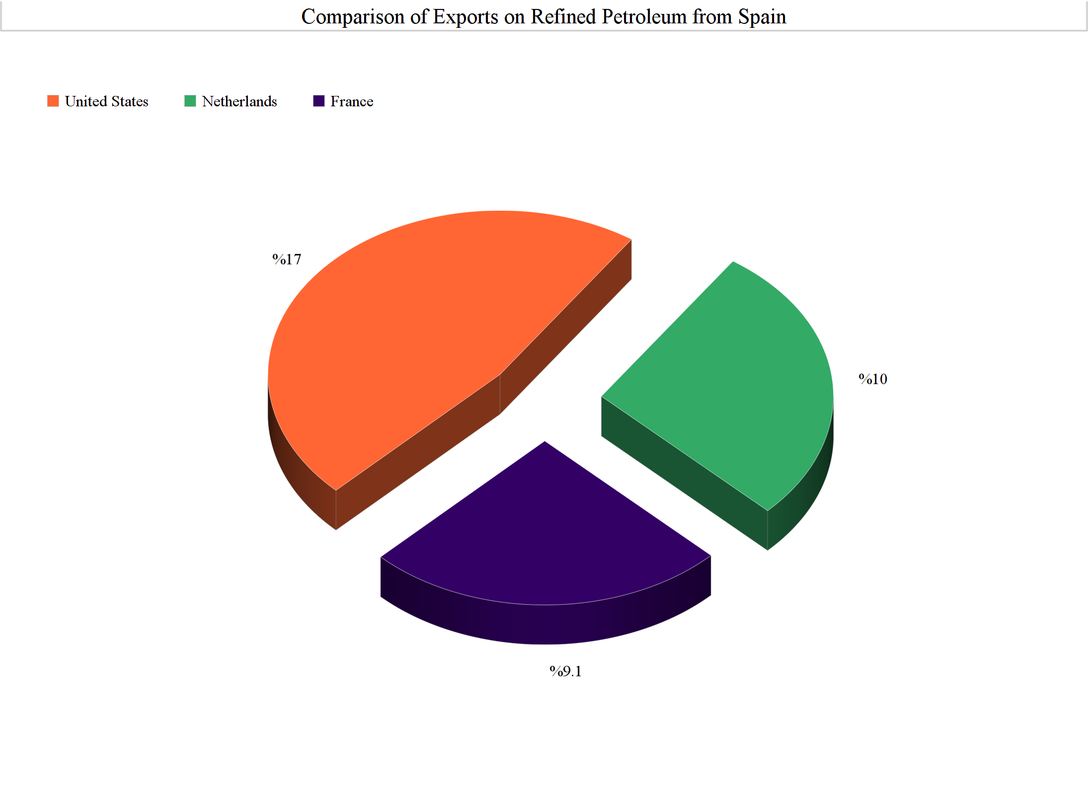
Spain holding the second most astounding income in the time of 2017 with the sent out of (Export) Processed Petroleum Oil up to $12.7 billion (up 53.3%)
Among the best 20 Spain Exported Products Processed Petroleum Oil put the second most noteworthy income and the Engines (diesel): $1.9 billion (down - 0.3%)
We notable about Spain, it is the gigantic nation to create income with fare merchandise and administrations among the general nations from Europe.
From this discernible examination, Spain creates an income with the most elevated proportion of trading the Processed Petroleum Oils with North America (United States).


In contrast to many of their export market destinations, which are predominantly European countries, Spain exports the largest amount of its refined petroleum to the United States (17%), with the Netherlands (10%) and France (9.1%) being the next biggest destinations.


Friday, December 28, 2018

Seismic Imaging

Oil Companies have to spend a lot of money on digging oil. They don't like to waste their time and money on an unproductive spot. There are so many failures in spotting the oil surface.
Seismic Imaging is one of the most important innovations in Oil Exploration helps in reducing the number of unproductive wells and useful to find productive wells.
                            
In the seismic imaging process, an energy source such as a vibrator truck sends sound waves deep into the earth. This relies on the idea that sound bounces off and travels in different ways. Special devices called geophones are positioned on the surface, which receives the sounds that bounce back up and send the information to recorder trucks.
Engineers and geophysicists study the recorded sound waves to interpret what kinds of layers of rock formation lie in that location. This way, they can construct 3-D images of what lies under the surface.

Thursday, December 13, 2018

History of OIL

Before the discovery of oil, people used Wood and Coal. People burned wood for Cooking, Warmth and also used as a building material. Wood is reminded as a global fuel for centuries.
In the 18th century after the invention of Steam Engines coal comes into the picture. Steam Engines can be powered either by wood or coal. Comparatively, with wood, coal became the most preferred fuel because coal produced 4 times energy as much energy as the same amount of wood and was cheaper to produce, easier to distribute. Coal has massive growth in the scale of industrialization.                                                     
The oil had been discovered by Chinese in 600 B.C and transported in pipelines from bamboo. However, Colonel Drake's heralded discovery of oil in Pennsylvania in 1859 with a well drilled just 69.5 feet deep. The earliest exploration companies began seeking oil for refining into a newly invented lamp fuel called kerosene. This "rock oil" fuel was cheaper than Whale oil and far safer than the more popular but explosive fuel, camphene and the Spindle top discovery oil in Texas in 1901 set the stage for the new oil economy.
Early energy issues included the need for an infrastructure for producing, storing, transporting oil and natural gas. As discoveries grew, the rush for "black gold" resulted in complex economic issues on a national scale, including wasteful over-production, sudden collapses of oil prices, questionable stock promotions and frequent boom and bust cycles.

Monday, December 3, 2018

Offshore Drilling and ROVS(Remotly Operated Vehicle)


As the oil and gas industry moves to a more subsea environment, ROVs will become an even more important tool in drilling, development, and repair offshore. In fact, some ROVs are being built to work on specific subsea developments, with manipulators and tools designed for work on equipment in a precise field. In this case, as the subsea architecture is being designed, the ROV that will handle the subsea work is taken into account, as well, ensuring that all tasks at hand can be managed by the ROV.

One of the technologies that spurred the development of offshore drilling was ROV (Remotely Operated Vehicle). In the 1970 Oil industry adapted ROV for drilling. Diving in deep water is dangerous for people. So the Military is using this ROV technology to retrieve the lost equipment underwater.


Saturday, November 24, 2018

New "Smart material " that can respond dynamically to its environment


Researchers have developed new material by combining the graphene oxide with the hydrogels made
from a natural material seaweed-derived alginate. This new Smart Material is durable and can respond dynamically with its environment used in a variety of biomedical applications.
One Limitation in the use of alginate hydrogels is that they tend to fall apart under mechanical load or in low salt solutions.
The research shows that under the chemical treatments this smart material is capable of becoming more stiffer or softer. It means that this new smart material is able to react to its surroundings. In addition, the alginate-GO retains alginate the ability to repel oils, giving the new material potential as a sturdy antifouling coating.

Innovation R&D | Robotic Drilling System | oil and gas industry

If you are interested in presenting a talk at the conference ( World Congress on Petrochemistry and Chemical Engineering ), please submit ...